Creative Engineering / Tools
Absynth Data Scraper
Python Computer Vision Pipeline
A brute-force Python automation tool using OCR and fuzzy matching to extract thousands of inaccessible metadata tags from a legacy synthesizer interface.
The Black Box Problem
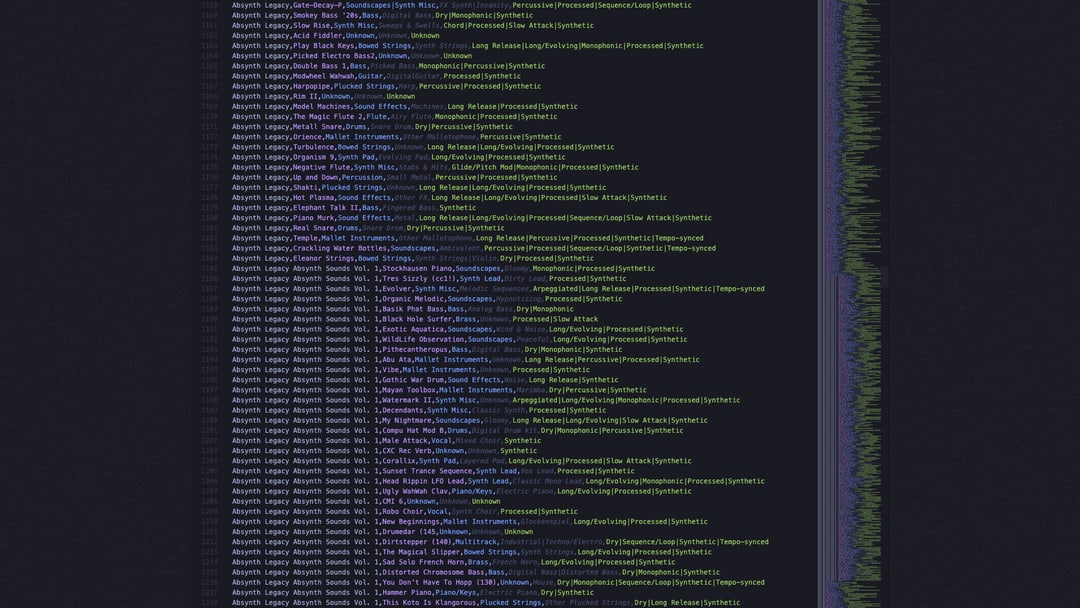
We needed to train an AI model on the Absynth preset library for the Preset Explorer. However, Absynth's legacy file format was a black box. There was no API, no database, and no way to export the categorization tags (Attributes, Modes) that our Sound Designers had painstakingly created over 20 years.
We needed that data to align with the modern NKSF standard, but it was trapped inside the UI.
The Solution: A Robot
I wrote a Python automation suite to physically "read" the screen. The script acted as a virtual user, clicking through every single filter in the Absynth interface, scrolling through lists, and using Optical Character Recognition (OCR) to transcribe the results.
The Pipeline
- UI Automation:
pyautoguicontrolled the mouse to select categories (e.g., "Bass", "Pad") and scroll the result lists. - Computer Vision:
EasyOCRandTesseracttook screenshots of the UI in real-time and converted the pixels to text. - Fuzzy Logic: Since OCR is imperfect (reading "Bass" as "8ass"), I implemented
RapidFuzzto validate the scraped text against a master list of known presets. - Data Merging: A reconciliation script merged the results from multiple OCR engines to ensure 99% accuracy.
Impact
Over a single night, the script generated a comprehensive CSV dataset of metadata that had been inaccessible for a decade.
- AI Training: Enabled Ninon Devis to cross-reference her timbral analysis with human-labeled tags.
- Sound Design: Gave the content team a master reference for NKSF migration.
It was a "hacker" solution to a corporate problem, using computer vision to break valubale data out of its legacy prison.